Five things Avaanz did that were a bit unique
We never had an office, and that was the least of it.
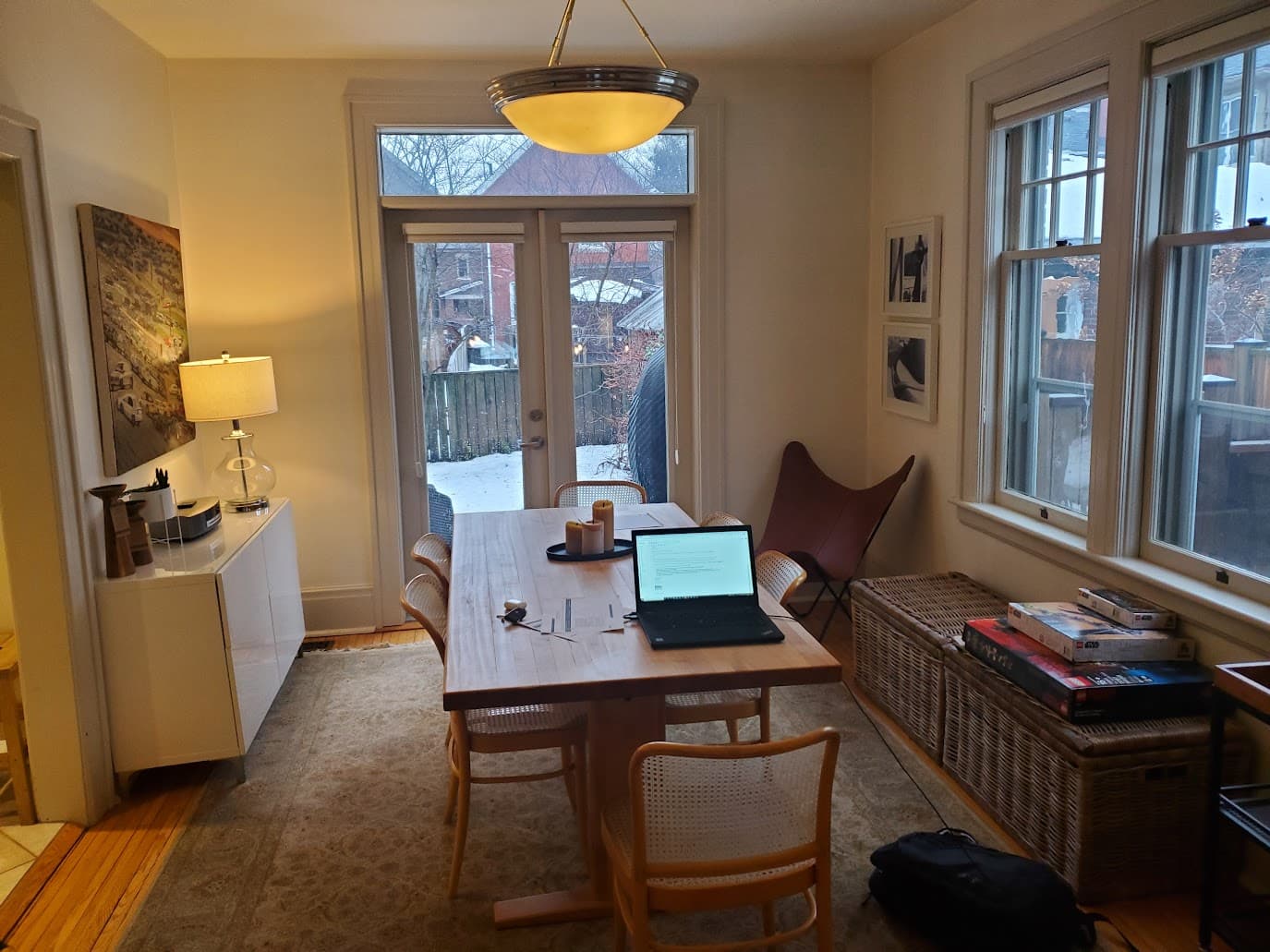
A few years ago, after I'd left AECOM, I got on the phone with an executive there who was relocating out of town to run his part of the business from his cottage. I said something about how Covid had changed the way we all work. He corrected me.
"We've been working remotely for years," he said. "It's just that before Covid we chose to come into the office to do it."
I was the CEO of Avaanz, an economic and environmental consulting firm of about 40 people in Guelph. It was acquired earlier this year. We never had an office, and that was the least of what we did a bit differently. Here are five.
1. We distributed profit two ways at once.
Owners were paid a salary based on the market value of their work, set separately from profit. The profit itself went out two ways at the same time. Most of it in proportion to ownership. The rest from a bonus pool we split equally, so every owner got the same dollar amount no matter their stake. The pool was 20% of the combined Direct Labour of the owners, meaning the cost of the hours we each spent on billable project work. Where the 20% came from, I honestly can't tell you. I think I was misremembering a benchmarking metric from a Professional Services Management Journal (PSMJ) report, and the number just stuck. Each owner held their own class of common voting share, which let us send different amounts of profit in different directions. Not all owners were employees. Smaller shareholders sometimes felt they put more into the business than the larger ones did and took home less for it. We never fully settled that one.
2. Owners could lend the company money.
Some owners were adamant about not putting their houses behind the business. So we came up with a plan that let us self-finance instead, and paid owners for whatever risk they chose to take. We paid 1.5% a month on money owners lent the firm, which works out to over 18% a year. We set it above bank rates because the lenders were taking on real risk.
It was optional. Some owners lent nothing. They were the ones who didn't want their houses near the business in the first place. A couple of others did the opposite. They borrowed against their own homes on a personal line of credit to lend the money in, because the return was worth it to them. Same plan, and it let one owner stay clear of the business while another put his house behind it. We treated the interest as dividend income to the lender, and we got our working capital without going to a bank.
3. We reimbursed owners and executives for the business use of their homes.
Every month, owners and executives got a reimbursement for the business share of running their homes: a portion of rent or mortgage interest, utilities, and property tax. The share was proportional to how much of the home the office took up, measured as the office's space against the whole. The reimbursement wasn't taxable, so a dollar of it was worth about $1.45 of pre-tax salary.
On the mortgage you count only the interest, never the principal. Put the principal in and you can trigger a capital gain on your primary residence when you sell it, so interest is the number that goes in. Because interest was usually the biggest of the costs we shared, bigger than utilities or property tax, it drove the whole calculation. The result was that the owners with the biggest mortgages got the most, which isn't really something you'd design on purpose.
4. We had two layers of health benefits.
Everyone had a base health plan. Executives and owners also had Health Spending Accounts, which reimbursed medical costs tax-free. As CEO I saw the totals, and every year therapy was the largest category. More than dental, more than prescriptions, more than anything else. Therapy was normal and unhidden at Avaanz, and at about $200 an hour an account doesn't last long. A leadership group of senior consultants, handed tax-free money to spend on their health, mostly spent it on someone to talk to.
5. We had no offices.
We worked from home from day one. An office for a firm our size runs about 10% of net service revenue, benchmarked to PSMJ data, and we just didn't spend it.
The cost showed up somewhere else, though. In onboarding, which was harder, and hardest on the junior staff. One person left because she wanted to be around people at work. And some juniors didn't work out because they couldn't get a handle on the work. I've wondered since whether an in-person setting would have given them a better shot. I don't know that it would have. But it might have.
It's weird being the CEO of a wholly owned subsidiary. You still have plenty of authority and all of the responsibility, but something's different, and I haven't quite worked out what. It's had me reflecting on my time with the firm. Most of that reflection has come from talking to ChatGPT while I walk. When I asked it what might make an interesting article out of our conversations, it highlighted these five. I rolled with it.